There are three books I recommend anybody read, if they want to get into making films or other narrative media.
It doesn’t matter if you want to write, direct, or edit – all three of these disciplines are aspects of a larger whole: cinematic storytelling. Knowing something about what each of your collaborators are doing helps you be better at your job.
These books are also very short. In my experience, the best books on craft usually are.
Backwards and Forwards by David Ball
If you want to create good narrative, you have to know what good narrative is doing. This book is a brisk and fun read covering exactly that.
Side note: he has a terrific “twist” moment when he explains exactly why Hamlet doesn’t work in modern productions, and it still stumps my Shakespeare friends when I bring it up.
On Directing Film by David Mamet
David Mamet is a very accomplished playwright, and in his transition into film, he broke down a lot of how he understands cinematic storytelling.
Take down everything he says about uninflected shots and juxtapostional storytelling. He has terrific advice about making decisions and the day-to-day work of directing. Ignore any advice he has about working with actors.
In the Blink of an Eye by Walter Murch
Walter Murch is a fantastic editor, but he’s also a devoted theorist about everything: cinema, work, life, creative collaboration. This book is full of those little ideas. Most will be interesting, a few you can ignore, and one or two will probably change your life.
Since reading this, I’ve used the methods he describes in the “Dreaming in Pairs” section in nearly every creative collaboration I’ve ever been a part of.
Bonus:
These books are a bit bigger, and break my “the best technique books are short books”, but if you’re looking for more specific information about your craft, they can provide it.
Directing Actors by Judith Weston
Working with actors is the Olympics of creative collaboration. They can be emotionally unstable, stubborn, needy, and/or self-interested.
They can also be the most willing, the most forgiving, the most vulnerable, and the most courageous members of your creative team.
Knowing how to work with them, and how to bring out the best in them without breaking them to your “vision”, is an enormous challenge, and can inform how you work with every other team member.
(Hint: it’s all about respect, and presenting creative opportunities instead of creative limits)
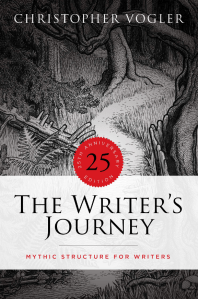
The Writer’s Journey by Christopher Vogler
If you’re interested in learning about Joseph Campbell’s Hero’s Journey, this is one way in. It breaks down how the “monomyth” can be applied to screenwriting and story structure.
You could just read Campbell’s Hero of a Thousand Faces instead, but I have never been able to get through it. I get about a page in before I start getting ideas, and then I’m down a rabbit hole in my notebook. Maybe one day.
There are plenty of reasons to be dubious about Campbell’s theories (it’s very grounded in Western thinking), but I do find a bit of structure helpful.
 Edward Newton